Chiltepin is a very small, round wild chile pepper. University of Arizona Extension identifies it as Capsicum annuum var. glabriusculum, describes a range of about 50,000 to 100,000 Scoville Heat Units, and notes that it grows naturally in southern Arizona and northwestern Mexico. It is used fresh, dried, pickled, or ground as a strong seasoning. University of Arizona Extension.
In this guide
- What is chiltepin?
- How hot is chiltepin?
- What does chiltepin taste like?
- Chiltepin vs chile pequin
- How to use chiltepin in cooking
- How to grow chiltepin
- When and how to harvest chiltepin
- How to dry and store chiltepin
- Chiltepin safety and handling
- Related reading
- FAQs
What Is Chiltepin?
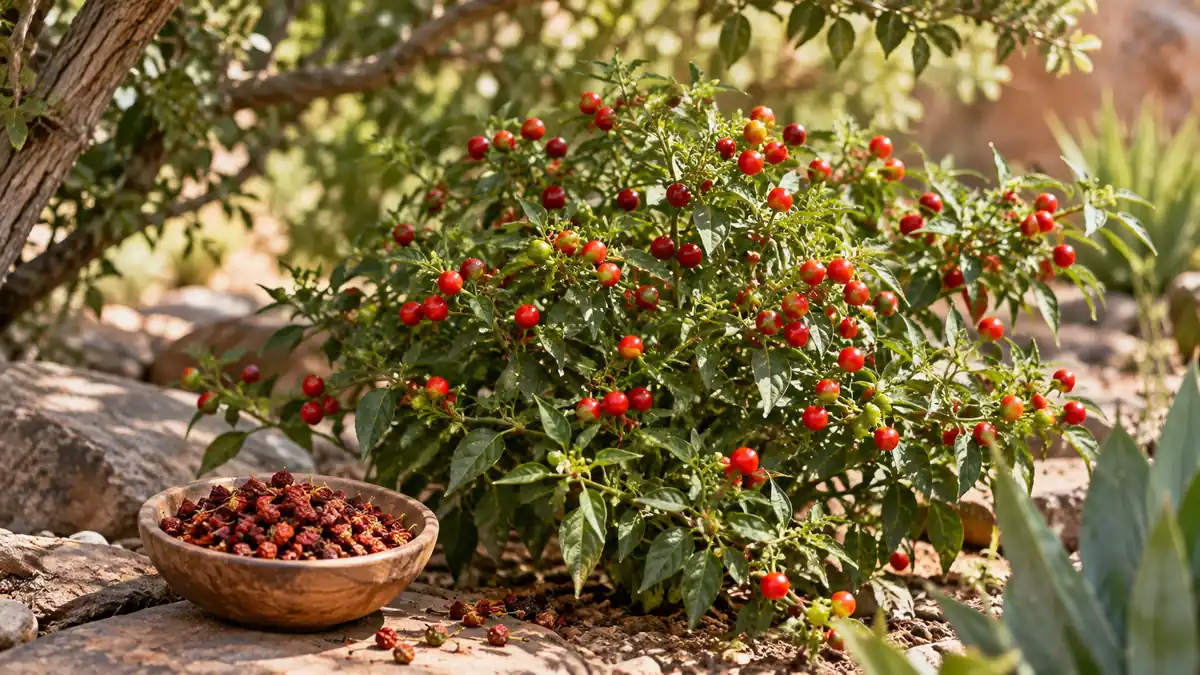
Chiltepin is the common name used for a tiny wild chile associated with Capsicum annuum var. glabriusculum. The fruit is much smaller than a jalapeno and is usually round to slightly oval. Ripe fruit commonly turns red.
The scientific classification is useful because common names vary by region. The U.S. Department of Agriculture's National Agricultural Library recognizes Capsicum annuum var. glabriusculum as a narrower taxon within Capsicum annuum. The University of Arizona also lists chiltepin as a wild chile in this group. USDA National Agricultural Library and University of Arizona Campus Arboretum.
Its range is closely associated with northern Mexico and the U.S. Southwest. University of Arizona Extension materials describe chiltepin growing in canyons and mountains of southern Arizona and northwestern Mexico, while broader botanical records show that the taxon occurs in other parts of the Americas as well. That is why a single statement about its geographic range can be misleading if it is presented as universal.
How Hot Is Chiltepin Pepper?
Chiltepin is genuinely hot despite its small size. University of Arizona Extension gives a range of approximately 50,000 to 100,000 Scoville Heat Units (SHU). That puts it far above the usual heat range associated with a jalapeno. University of Arizona Extension.
Do not treat the SHU range as a guaranteed number for every pepper. Wild populations contain genetic variation, and growing conditions and fruit maturity can affect pungency. A recipe should therefore treat chiltepin as a high-heat ingredient rather than assuming every fruit has exactly the same strength.
| Pepper | Typical heat context | Practical takeaway |
|---|---|---|
| Bell pepper | Very mild to no detectable heat | Used mainly for flavor and texture |
| Jalapeno | Moderately hot | Often used in larger quantities |
| Chiltepin | About 50,000 to 100,000 SHU in University of Arizona Extension material | Use small amounts |
| Habanero | Very hot | Usually used sparingly |
The most useful cooking rule is simple: start with less chiltepin than you think you need. You can always add more heat, but it is much harder to remove it from a finished salsa, soup or sauce.
What Does Chiltepin Taste Like?
Heat is the first thing most people notice, but chiltepin is not simply a source of capsaicin. Fresh and dried fruit can contribute a distinct peppery, earthy character. Drying changes both texture and aroma, which is one reason dried chiltepin is often treated as a seasoning rather than a vegetable.
The final flavor depends on the fruit, growing conditions and preparation. Toasting or grinding can bring out deeper roasted notes, while using fresh or green fruit gives a different profile. University of Arizona Extension notes that chiltepin can be eaten raw, dried, pickled, green or ripe.
Chiltepin vs Chile Pequin: Are They the Same?
This is one of the most confusing parts of searching for chiltepin online. The names overlap. Some retailers and food writers use chiltepin and pequin as distinct names for closely related peppers, while botanical and regional references may use those common names differently.
For example, the University of Arizona Campus Arboretum lists chiltepin, bird pepper and pequin pepper as common names for its Capsicum annuum var. glabriusculum entry. Other sources distinguish a round chiltepin from a more elongated pequin. Because common-name usage is inconsistent, the safest approach is to check the scientific name, fruit shape and provenance when identification matters. University of Arizona Campus Arboretum.
| Feature | Chiltepin | Pequin or piquin in some sources |
|---|---|---|
| Common appearance | Small and round to slightly oval | Often described as more elongated |
| Naming | Also called tepin in some regions | May be called pequin, piquin or related regional names |
| Botanical context | Often associated with C. annuum var. glabriusculum | Common-name usage varies by source |
| Best identification method | Combine shape, source and botanical information | Do not rely on the common name alone |
This naming issue is also why search results for "chiltepin pepper" can contain pages that appear to describe slightly different peppers. For an article intended to be useful across regions, it is better to explain the naming variation than to present one common-name rule as universally correct.
How to Use Chiltepin Pepper in Cooking
Chiltepin works best when you want concentrated heat in a small quantity. University of Arizona Extension recommends uses including salsa, soups and general seasoning, and notes that the pepper can be used fresh, dried or pickled.

1. Salsa
Crush or grind dried chiltepin and add a little at a time to tomato-based or roasted salsas. Because the peppers are so concentrated, a small quantity can change the heat level quickly.
2. Soups and stews
Add whole dried peppers or a small amount of ground chiltepin to bean soups, vegetable soups and slow-cooked stews. Whole peppers make it easier to control how much heat is released during cooking.
3. Eggs and breakfast foods
A pinch of ground chiltepin can be used like a hot pepper seasoning for scrambled eggs, omelets or breakfast beans. Start with a very small amount.
4. Marinades and sauces
Ground chiltepin can be blended into marinades and sauces with acidic ingredients such as lime or vinegar, herbs and other seasonings. The goal is to use enough for heat without overwhelming the rest of the dish.
5. Pickled green chiltepin
University of Arizona Extension specifically notes green chiltepin as a pickling option. If you pickle peppers at home, follow a tested food-preservation recipe rather than improvising the acid concentration.
How to Grow Chiltepin Peppers
Chiltepin can be grown at home, but it does not behave exactly like every common garden pepper. University of Arizona Extension notes that it is sensitive to summer heat and winter frost and recommends a garden position with shade from trees or shrubs. Seed suppliers and growers also report that establishment from seed can be slower or more demanding than expected.
Start with seeds or a healthy plant
If starting from seed, use fresh, correctly identified seed and provide warm conditions for germination. Truelove Seeds recommends starting indoors 8 to 10 weeks before the last frost and transplanting after frost danger has passed. Truelove Seeds growing notes.
Choose the site carefully
Native habitat matters. University of Arizona Extension recommends shade from trees or larger shrubs, which can help recreate the conditions under which wild chiltepin grows. In a hot climate, bright filtered light can be more useful than placing the plant in the most exposed location in the garden.
Use well-drained soil
Like other peppers, chiltepin should not sit in constantly waterlogged soil. Use a container or garden bed with reliable drainage. If your soil is heavy, improving structure with appropriate organic matter can help, but avoid creating a container that stays saturated.
Water consistently while establishing
Young plants need reliable moisture while roots develop. Once established, avoid both prolonged drought stress and repeated overwatering. The exact watering schedule should follow your local temperature, rainfall, container size and soil drainage.
Protect plants from frost
Cold is a major limitation. If frost is expected, protect the plant or move a container into a sheltered location. In warm regions, chiltepin can behave as a longer-lived plant, while colder climates may require treating it as a seasonal crop or overwintering it indoors.
When and How to Harvest Chiltepin
For ripe chiltepin, the most obvious harvest signal is color. The fruit changes from green toward a mature red color. University of Arizona Extension notes that wild chiltepin commonly ripens in September and October in its regional context.
Harvest ripe fruit carefully so you do not damage the branches. Because the peppers are small, it can be easier to collect them into a shallow bowl or tray rather than trying to carry a large handful at once.
Truelove Seeds recommends harvesting seed when the fruit has reached its final red color. If you are saving seed, allow selected fruit to fully mature before removing and drying the seeds.
How to Dry and Store Chiltepin
Drying is a practical way to preserve a small harvest. Spread ripe peppers in a clean, dry location with good airflow and protect them from excess humidity. Once thoroughly dry, store them in an airtight container away from direct sunlight and heat.
For ground chiltepin, grind only the quantity you expect to use relatively soon. Whole dried peppers generally preserve their aroma better than a large jar of powder that is opened repeatedly.
Chiltepin Safety and Handling
Chiltepin contains capsaicin, the compound responsible for the burning sensation produced by hot peppers. The University of Arizona Campus Arboretum describes the fruit as having a relatively high amount of capsaicin.
- Wash your hands thoroughly after handling fresh or dried chiltepin.
- Avoid touching your eyes, nose or other sensitive areas while preparing the peppers.
- Use gloves if you are handling a large quantity or grinding dried peppers.
- Start with a small amount when cooking for people who are unfamiliar with the pepper.
- Keep dried peppers and ground chile away from children and pets.
- If pepper dust causes significant eye or breathing irritation, move away from the source and seek appropriate medical advice if symptoms are severe or persistent.
Is Chiltepin Healthy?
Chiltepin is a food ingredient, not a treatment for a disease. It contains capsaicin and other naturally occurring plant compounds, but the presence of these compounds should not be turned into a claim that chiltepin prevents or treats a particular medical condition.
If you enjoy spicy foods, chiltepin can be part of a varied diet in the same way other peppers can. The main practical consideration is portion size because its heat is concentrated.
Chiltepin vs Jalapeno: Which Is Hotter?
Chiltepin is much hotter than a typical jalapeno. University of Arizona Extension places chiltepin around 50,000 to 100,000 SHU. Jalapeno peppers are generally far lower on the Scoville scale, so chiltepin should be used more like a concentrated chile seasoning than a large-volume fresh pepper.
What Is Chiltepin Called in Spanish?
Regional names include chiltepín, chiltipiquín, piquin and tepin. The University of Arizona Extension handout lists several of these names together. Because common names overlap, the scientific name can be useful when you need to identify a specific plant or seed line.
Why Is Chiltepin Sometimes Called the "Mother of All Peppers"?
The phrase appears frequently in food writing because wild chiltepin is closely connected to the evolutionary history of cultivated Capsicum annuum. Genetic research has described chiltepin as the wild progenitor of cultivated C. annuum. That scientific relationship is more precise than simply saying that every modern chile came directly from one chiltepin plant.
A peer-reviewed study of chiltepin genetic diversity also found meaningful genetic differences among populations across a broad geographic range, which supports treating wild populations as valuable genetic resources rather than as one perfectly uniform type. University of Arizona research record.
Related Reading From Our Site
For readers interested in food, herbs, nutrition and evidence-based wellness topics, these existing articles can provide useful context:
- Thai Basil: Uses, Flavor, Benefits & How to Grow It
- Moringa Powder: Benefits, Nutrition, Uses & Safety
- The Anti-Inflammatory Diet: A Complete 30-Day Plan
- Foods That Lower Cortisol Naturally: What the Science Actually Says
- 7 Natural Remedies to Heal Your Gut in 30 Days
- The Ultimate Free Wellness Toolkit
Frequently Asked Questions About Chiltepin
What is chiltepin pepper?
Chiltepin is a tiny wild chile associated with Capsicum annuum var. glabriusculum. It is particularly associated with northern Mexico and the U.S. Southwest and is commonly used dried, fresh or pickled.
How hot is chiltepin?
University of Arizona Extension gives chiltepin a heat range of about 50,000 to 100,000 SHU. Individual fruits can vary, so treat the range as a guide rather than an exact reading.
Is chiltepin hotter than jalapeno?
Yes. Chiltepin is substantially hotter than a typical jalapeno and should generally be used in smaller quantities.
What does chiltepin taste like?
It has a strong pepper flavor with an earthy character. Drying and roasting can deepen the flavor, while fresh and green fruit provide a different profile.
Is chiltepin the same as chile pequin?
Not always in everyday usage. Some sources distinguish round chiltepin from elongated pequin, while other regional sources use the names interchangeably for closely related peppers. Check the botanical name and fruit shape when accurate identification matters.
What can I cook with chiltepin?
Try it in salsa, soups, beans, eggs, marinades, sauces and seasoning blends. Dried chiltepin is especially convenient because it can be crushed or ground into small portions.
When should I pick chiltepin peppers?
Pick ripe fruit when it reaches its mature red color. In the regional context described by University of Arizona Extension, wild chiltepin commonly ripens in September and October.
Can chiltepin grow in a pot?
Yes. A container can work if it has good drainage, sufficient root space and a warm growing environment. Protect the plant from frost and avoid keeping the soil constantly saturated.
How do I store dried chiltepin?
Use a clean airtight container and keep it somewhere cool, dry and dark. Whole dried peppers usually retain their character better than repeatedly opened ground powder.
Can chiltepin cause irritation?
Yes. Its capsaicin content can produce strong burning on skin and mucous membranes. Wash your hands after handling it and avoid touching your eyes.
Key Takeaways
- Chiltepin is a very small wild chile associated with Capsicum annuum var. glabriusculum.
- University of Arizona Extension gives a heat range of about 50,000 to 100,000 SHU.
- It can be used fresh, dried, green, pickled or ground.
- Common names overlap, especially with pequin and tepin, so botanical information is useful for identification.
- For growing, protect young plants from frost and avoid assuming that full, exposed sun is always best in hot climates.
- Harvest ripe fruit when it reaches its mature red color.
- Because chiltepin is very hot, use small quantities and handle it carefully.
Sources and References
- University of Arizona Cooperative Extension: Wild Chile, Chiltepin. Used for botanical identification, regional growing information, heat range, harvest timing and culinary uses.
- University of Arizona Campus Arboretum: Capsicum annuum, variety glabriusculum. Used for botanical description, common-name variation and capsaicin context.
- USDA National Agricultural Library: Capsicum annuum. Used for taxonomic context.
- University of Arizona research record: Genetic diversity in chiltepin. Used for the discussion of genetic variation and conservation value.
- Monash University research record: Whole-genome sequencing of cultivated and wild peppers. Used for the relationship between cultivated C. annuum and its wild progenitor.
- Truelove Seeds: Chile Chiltepin. Used for practical seed-starting and harvesting notes. These are grower or seller recommendations and are identified as such.
Competitor pages reviewed for search-intent and content-gap research included Truelove Seeds, Leslie Halleck, Spices Inc., PepperScale, SpiceJungle, Wikipedia and other pages visible in the supplied SERP screenshot. This article does not reproduce their wording. The competitor review was used to identify recurring search needs such as heat level, appearance, chiltepin versus pequin, cooking uses, growing and harvesting.
Editorial note: This article is original informational content and is not a substitute for professional medical, horticultural or food-safety advice. Common names for wild peppers vary by region, so plant identification should be confirmed from a reliable botanical source when accuracy matters.