Thai basil is a fragrant culinary herb recognized for its narrow green leaves, often-purple stems, and distinctive sweet, anise-like aroma. It is widely used in Southeast Asian cooking, where it adds a fresh, peppery flavor to curries, stir-fries, noodle dishes, and soups.
In This Article
- What Is Thai Basil?
- What Does Thai Basil Taste Like?
- How to Use Thai Basil
- Thai Basil Chicken
- Thai Basil vs. Holy Basil
- Thai Basil Benefits and Nutrition
- Where to Buy Thai Basil
- How to Grow Thai Basil
- How to Store Thai Basil
- Frequently Asked Questions
What Is Thai Basil?
Thai basil is a variety of basil known botanically as Ocimum basilicum var. thyrsiflora. It belongs to the mint family and is valued for its distinctive aroma and ability to retain much of its flavor during cooking.
Thai basil typically has pointed green leaves, sturdy stems that may appear purple, and purple-pink flower spikes. Its appearance and flavor distinguish it from the sweet basil commonly used in Italian cooking. Learn more about Thai basil.
The herb is commonly used in Thai dishes and also appears in Vietnamese and other Southeast Asian cuisines. It can be added to cooked dishes or served fresh as an aromatic garnish.
What Does Thai Basil Taste Like?
Thai basil has a sweet, peppery flavor with noticeable anise and licorice-like notes. Compared with Italian sweet basil, its aroma is often bolder and more spice-forward.
Its flavor works particularly well with ingredients such as garlic, chili, coconut milk, lime, soy sauce, noodles, vegetables, chicken, seafood, and tofu. The herb can be used during cooking, although adding it near the end often helps preserve its fresh aroma.
How to Use Thai Basil
Thai basil is a versatile herb that can add fragrance and flavor to everyday meals. Here are several common ways to use it:
- Curries: Stir fresh leaves into Thai green or red curry near the end of cooking.
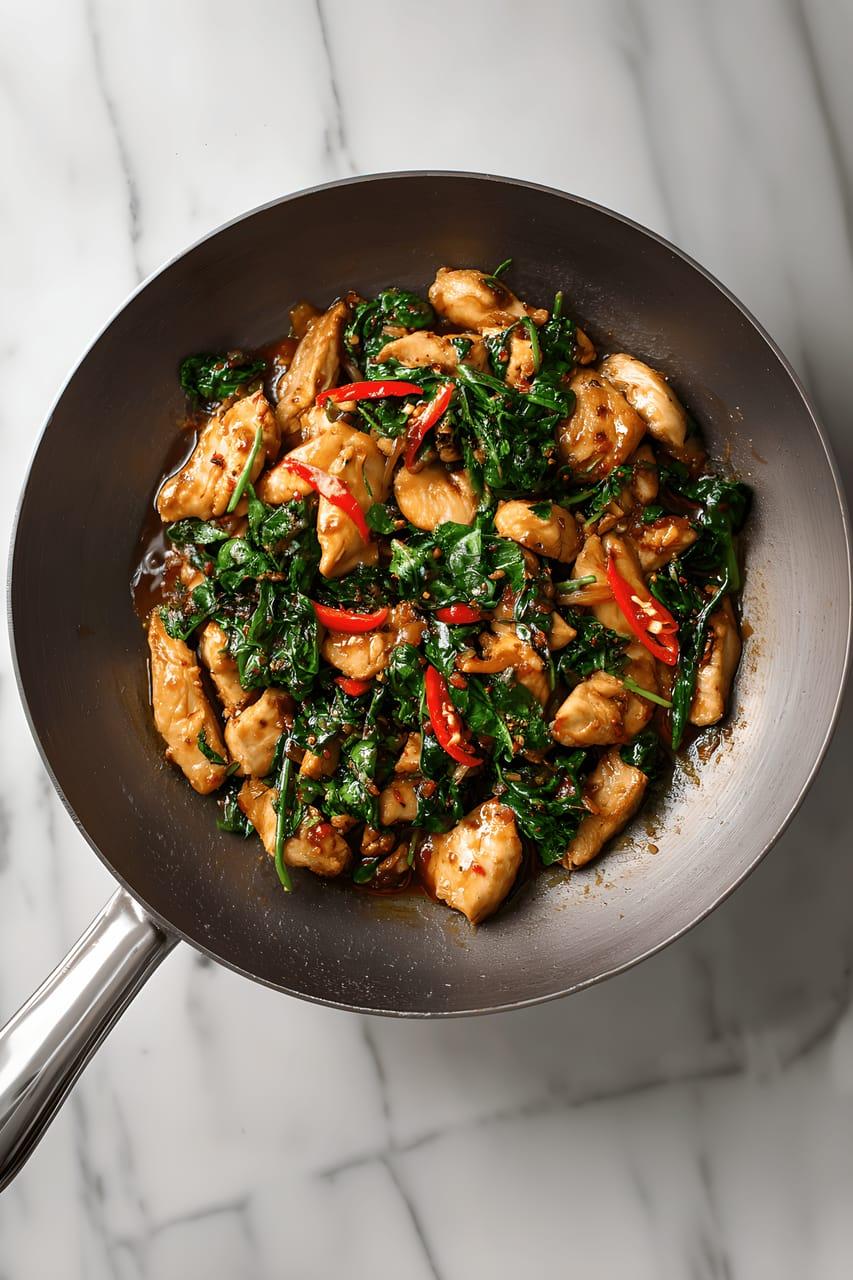
- Stir-fries: Add the leaves to chicken, beef, seafood, tofu, or vegetable stir-fries.
- Noodle dishes: Use Thai basil in noodle dishes or serve it alongside them as a fresh garnish.
- Soups: Add a few leaves to a bowl of soup just before serving for a fragrant finish.
- Fresh rolls and salads: Include the leaves in fresh rolls or salads for an aromatic herbal note.
For more ideas, explore our recipe collection.
Thai Basil Chicken: A Popular Way to Use the Herb
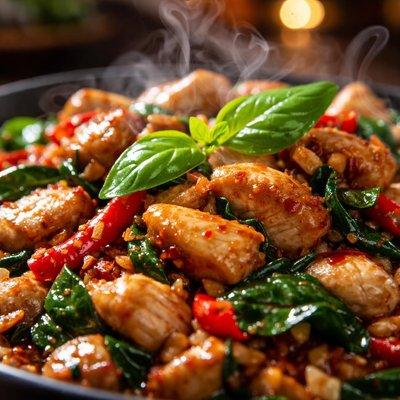
Thai basil chicken is a flavorful dish commonly made with chicken, garlic, chili, savory seasonings, and basil. It is often served with steamed rice and may be topped with a fried egg.
Simple Thai Basil Chicken Ingredients
- Chicken, minced or finely chopped
- Fresh Thai basil leaves
- Garlic, minced
- Fresh chili, adjusted to taste
- Soy sauce or other suitable savory seasonings
- A little cooking oil
- Cooked rice, for serving
Basic Cooking Method
- Prepare the chicken, garlic, chili, and Thai basil leaves.
- Heat a little oil in a pan or wok.
- Add the garlic and chili and cook briefly until fragrant.
- Add the chicken and cook until it is thoroughly cooked.
- Season to taste, then stir in the Thai basil leaves.
- Serve hot with rice.
This is a simplified home-cooking method rather than a claim to be the definitive traditional recipe. Adjust the seasonings and chili level to suit your preferences.
Thai Basil vs. Holy Basil: What Is the Difference?
Thai basil and holy basil are different herbs, although their names are sometimes confused in English-language recipes.
| Feature | Thai Basil | Holy Basil |
|---|---|---|
| Botanical name | Ocimum basilicum var. thyrsiflora | Ocimum tenuiflorum |
| Flavor profile | Sweet, anise-like, and slightly peppery | Often described as peppery, clove-like, and more pungent |
| Common culinary role | Curries, noodle dishes, and stir-fries | Frequently associated with pad krapao-style dishes |
Because the herbs have different flavor profiles, substituting one for the other can noticeably change a dish. When a recipe specifies Thai basil, use it if available; otherwise, choose a substitute based on the flavor you want.
Botanical and culinary references distinguish Thai basil from holy basil and lemon basil. Read a guide to the different basils.
Thai Basil Benefits and Nutrition
Thai basil is an aromatic herb that can contribute flavor to meals without requiring large quantities of added seasoning. Like other leafy herbs, it contains naturally occurring plant compounds.
However, evidence about compounds studied in laboratory settings should not be interpreted as proof that eating ordinary culinary amounts of Thai basil prevents or treats disease. Research findings about concentrated extracts or essential oils also cannot automatically be applied to fresh leaves.
For general wellness, Thai basil is best enjoyed as part of a varied, balanced eating pattern rather than as a treatment or supplement.
Where to Buy Thai Basil
If you are wondering where to buy Thai basil, check Asian grocery stores, specialty produce markets, farmers' markets, and supermarkets with a well-stocked fresh herb section. Availability varies by location and season.
You may also find Thai basil plants or seeds at garden centers and online gardening retailers. Search for the herb by its common name and, where possible, check the botanical name to avoid confusing it with sweet basil, holy basil, or lemon basil.
How to Choose Fresh Thai Basil
- Look for leaves that appear fresh and relatively firm.
- Avoid bunches with widespread blackening, sliminess, or decay.
- Choose herbs with a fresh, aromatic smell.
- Check labels carefully if you need a specific basil variety.
How to Grow Thai Basil
Thai basil can be grown in a garden or container when it has suitable warmth, sunlight, water, and soil conditions. Growing requirements depend on the local climate and growing environment.
- Choose a sunny location: Select a spot with plenty of light and warmth.
- Use well-drained soil: Choose soil or potting mix that allows excess water to drain away.
- Water consistently: Keep the soil from drying out completely, but avoid leaving the roots in waterlogged soil.
- Harvest regularly: Pick healthy leaves as needed and prune the plant to encourage bushier growth.
- Monitor the plant: Check for pests, disease, and signs of stress, and adjust care as needed.
For additional basil-growing guidance, consult this Thai basil growing guide.
How to Store Thai Basil
Fresh Thai basil is delicate, so handle it gently and use it while the leaves are still fresh. Remove damaged leaves and keep the remaining bunch away from excess moisture.
Storage methods can vary depending on how fresh the herb is and how soon you plan to use it. If refrigerating it, protect the leaves from crushing and check them regularly for wilting or spoilage. For longer storage, freezing may be an option, although the leaves can lose some of their fresh texture.
Frequently Asked Questions About Thai Basil
What is Thai basil?
Thai basil is an aromatic variety of basil, commonly identified as Ocimum basilicum var. thyrsiflora. It is widely used in Southeast Asian cooking and is known for its anise-like flavor.
What does Thai basil taste like?
Thai basil has a sweet, aromatic flavor with anise-like, licorice-like, and slightly peppery notes.
Is Thai basil the same as holy basil?
No. Thai basil and holy basil are different herbs with different botanical identities and flavor profiles. They are not always interchangeable in recipes.
Where can I buy Thai basil?
Look for Thai basil at Asian grocery stores, specialty produce markets, farmers' markets, garden centers, and retailers that sell herb seeds or plants. Availability depends on your area.
How do I grow Thai basil?
Grow Thai basil in a warm, sunny location with well-drained soil. Water consistently without waterlogging the roots, and harvest leaves regularly as the plant grows.
Can I use regular sweet basil instead of Thai basil?
Sweet basil can be used when Thai basil is unavailable, but the result will taste different. Sweet basil generally lacks the distinctive anise-like flavor associated with Thai basil.
The Bottom Line
Thai basil is a distinctive culinary herb that brings sweet, anise-like aroma and a peppery note to curries, stir-fries, soups, and noodle dishes. Knowing how it differs from holy basil can help you choose the right herb for a recipe.
Whether you buy it fresh or grow it at home, Thai basil is a useful ingredient to keep on hand when preparing Southeast Asian-inspired meals.
References
- The Spruce: How to Grow Thai Basil
- Thai Basil: Botanical and Culinary Overview
- Gardening Channel: Growing Thai Basil
Editorial note: This article is for general informational and culinary purposes. It is not a substitute for professional medical or dietary advice.