Quick answer: The Kyleena IUD is a hormonal intrauterine device that releases 19.5 mg of levonorgestrel, a progestin, inside the uterus. It is approved to prevent pregnancy for up to 5 years and is more than 99% effective during each year of use. Kyleena can be removed by a healthcare professional at any time if you want to change your birth control method or try to become pregnant.
For many people, the appeal of Kyleena is its long-lasting protection without having to remember a daily pill. However, it can also change menstrual bleeding, cause temporary discomfort after insertion, and has risks that should be discussed with a qualified healthcare professional.
Key Takeaways
- Kyleena lasts up to 5 years for pregnancy prevention.
- It contains 19.5 mg of levonorgestrel, a type of progestin.
- Kyleena is over 99% effective at preventing pregnancy during each year of use.
- Spotting and irregular bleeding are common during the first 3 to 6 months.
- Periods may become lighter, shorter, or stop over time.
- Kyleena does not protect against sexually transmitted infections (STIs).
- It can be removed at any time by a healthcare professional.
- Severe or persistent pelvic pain, excessive bleeding, suspected pregnancy, fever, or unusual discharge should be evaluated promptly.
What Is the Kyleena IUD?
Kyleena is a small, T-shaped hormonal intrauterine device (IUD) placed inside the uterus by a healthcare professional. It releases a continuous, low dose of levonorgestrel, a progestin hormone, to prevent pregnancy.
Kyleena is designed to provide contraception for up to 5 years. It is also reversible, meaning a healthcare professional can remove it when you decide to stop using it. According to the manufacturer's current patient information, Kyleena can be used whether or not you have previously had a baby. :contentReference[oaicite:1]{index=1}
Unlike birth control pills, Kyleena does not require a daily dose. The device works primarily inside the uterus, where it releases levonorgestrel continuously.
How Does the Kyleena IUD Work?
If you are searching for how does Kyleena IUD work, the short answer is that its levonorgestrel changes the environment in the reproductive tract in several ways.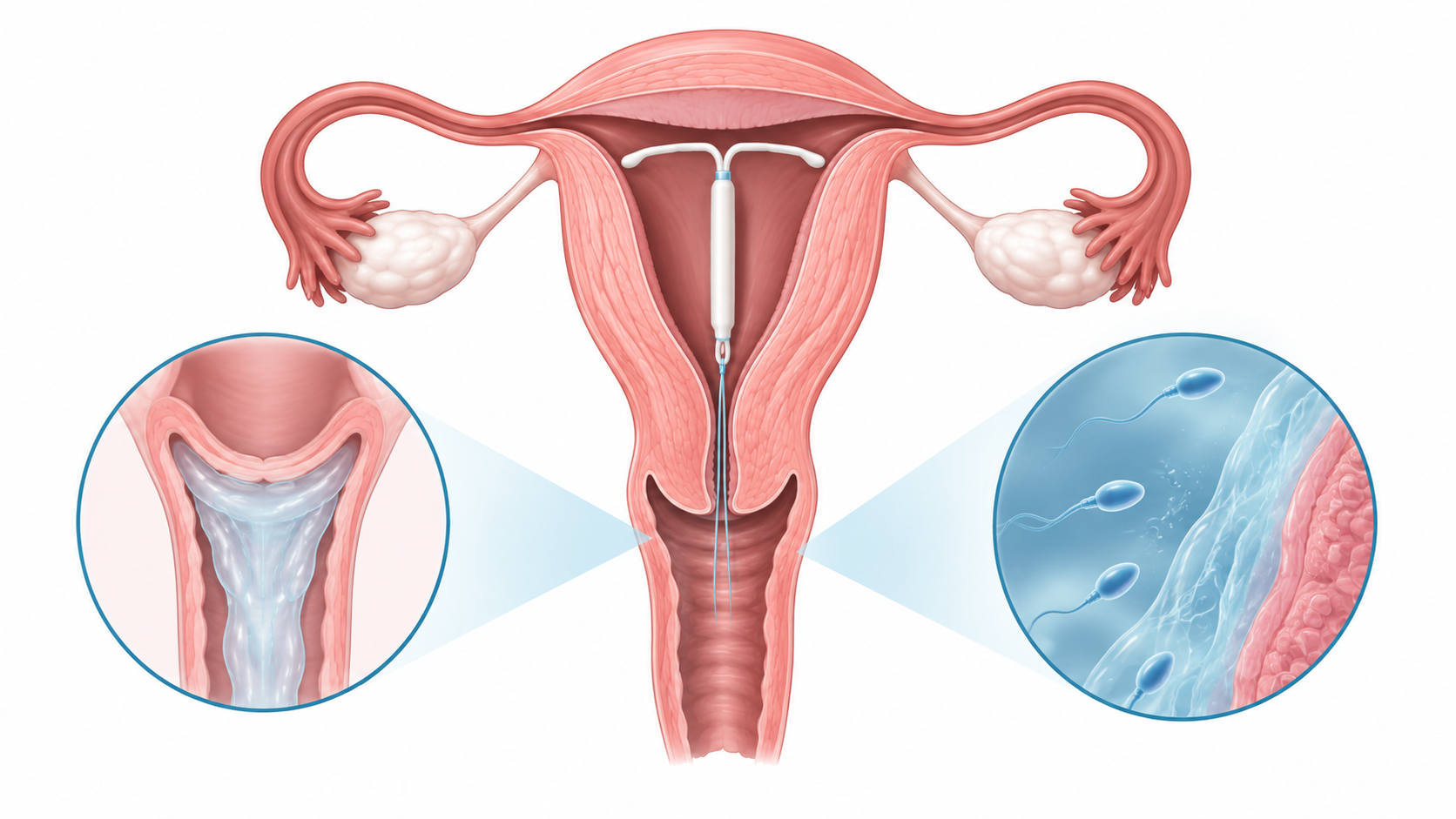
Kyleena releases levonorgestrel into the uterus. The hormone most likely prevents pregnancy by:
- Thickening cervical mucus, making it harder for sperm to enter the uterus.
- Reducing sperm movement, making it more difficult for sperm to reach and fertilize an egg.
- Thinning the uterine lining, making it less suitable for implantation.
The manufacturer notes that the exact contribution of each mechanism is not completely known. :contentReference[oaicite:2]{index=2}
Kyleena contains 19.5 mg of levonorgestrel. Because the hormone is released primarily inside the uterus, only small amounts enter the bloodstream compared with the amount released locally in the uterus. :contentReference[oaicite:3]{index=3}
How Long Does the Kyleena IUD Last?
Kyleena lasts for up to 5 years for pregnancy prevention. This makes Kyleena IUD duration one of the major reasons people choose this form of birth control.
It does not have to remain in place for the entire five years. If your contraceptive needs change, a healthcare professional can remove Kyleena earlier.
If you reach the end of the approved five-year period and want to continue using an IUD, talk with your healthcare professional about removal and replacement rather than assuming the existing device should remain in place.
How Effective Is the Kyleena IUD?
How effective is the Kyleena IUD? Kyleena is more than 99% effective at preventing pregnancy during each year of use. The manufacturer's patient information reports a 98.6% effectiveness rate over five years. :contentReference[oaicite:4]{index=4}
More broadly, the CDC reports that fewer than 1 out of 100 IUD users become pregnant during the first year with typical use. IUDs are considered long-acting and reversible contraceptive methods. :contentReference[oaicite:5]{index=5}
One reason IUDs have such high effectiveness is that they do not depend on remembering a pill every day or replacing a patch or ring on a schedule.
Kyleena IUD Side Effects
The side effects of the Kyleena IUD can vary from person to person. Some effects are most noticeable shortly after insertion, while others relate to changes in menstrual bleeding.
Common Kyleena IUD Side Effects
Reported side effects include:
- Spotting or irregular bleeding
- Changes in menstrual periods
- Pelvic or abdominal pain
- Headache or migraine
- Acne or oily skin
- Painful periods
- Breast pain or tenderness
- Vulvovaginitis
- Ovarian cysts
- Pain, bleeding, or dizziness around the time of placement
The official Kyleena information reports that approximately 22 out of 100 users develop an ovarian cyst. Most ovarian cysts go away on their own, although some can cause pain and occasionally require treatment. :contentReference[oaicite:6]{index=6}
Does Kyleena Change Your Period?
Yes. Changes in bleeding are one of the most common experiences with a hormonal IUD.
During the first 3 to 6 months after Kyleena is placed, spotting and irregular bleeding may occur. Some people initially experience bleeding that is heavier than usual. Over time, bleeding generally becomes lighter, although patterns can vary. :contentReference[oaicite:7]{index=7}
Some people eventually have very light periods or no menstrual period at all. The manufacturer's patient information states that about 12 out of 100 women stop having periods after one year of Kyleena use. :contentReference[oaicite:8]{index=8}
If you are tracking menstrual symptoms, mood, or skin changes, our guide to what to eat during the luteal phase provides additional information about menstrual-cycle changes and nutrition.
What Should You Expect During Kyleena Insertion?
Kyleena is inserted into the uterus by a trained healthcare professional during an office visit. The procedure itself is usually relatively brief, but the experience varies considerably between individuals.
You may experience:
- Cramping
- Pelvic discomfort
- Light bleeding
- Dizziness
The official Kyleena information specifically advises contacting your healthcare professional if pain, bleeding, or dizziness does not settle after placement or if symptoms are concerning. :contentReference[oaicite:9]{index=9}
Your healthcare professional may discuss pain-management options with you before the procedure. The best approach depends on your medical history and individual circumstances.
When Does Kyleena Start Working?
When Kyleena becomes effective depends on when it is inserted and your previous contraceptive method. Your healthcare professional should tell you whether you need backup contraception after placement.
Do not assume that Kyleena provides immediate pregnancy protection in every situation. Follow the instructions given by your healthcare professional regarding condoms or another backup contraceptive method.
Can Kyleena Fall Out?
Yes. An IUD can sometimes be expelled from the uterus. If you think Kyleena has moved or fallen out, contact your healthcare professional.
Kyleena's patient information recommends checking the IUD threads regularly so that you can become familiar with their position. The manufacturer recommends a follow-up visit approximately 4 to 6 weeks after placement. :contentReference[oaicite:10]{index=10}
If you cannot feel the threads, feel more than the threads, or think the IUD has moved, use non-hormonal backup contraception and contact your healthcare professional for assessment. :contentReference[oaicite:11]{index=11}
Who Should Not Use Kyleena?
Kyleena is not appropriate for everyone. The manufacturer's prescribing information lists several situations in which Kyleena should not be used, including certain current or previous infections, pregnancy or suspected pregnancy, unexplained vaginal bleeding, certain cancers, some liver conditions, and abnormalities of the uterus that interfere with placement. :contentReference[oaicite:12]{index=12}
Your healthcare professional will review your medical history before insertion. The CDC's contraceptive guidance also uses specific medical eligibility categories to determine whether an IUD can be initiated or continued in people with particular medical conditions. :contentReference[oaicite:13]{index=13}
This is particularly important if you have a current pelvic infection, a history of pelvic inflammatory disease, unexplained vaginal bleeding, or a condition affecting the shape of the uterine cavity.
What Are the Risks of the Kyleena IUD?
Kyleena is highly effective, but like any medical procedure or contraceptive method, it has potential risks.
Pelvic Infection
Serious pelvic inflammatory disease (PID) is uncommon. The manufacturer's current safety information reports that less than 1% of Kyleena users develop serious PID. :contentReference[oaicite:14]{index=14}
The risk of infection should be discussed with your healthcare professional, particularly if you have symptoms or risk factors for sexually transmitted infections.
Perforation
Rarely, an IUD can pass through the wall of the uterus during insertion. This is called uterine perforation and requires medical assessment.
Expulsion
Kyleena can partially or completely come out of the uterus. If this happens, pregnancy protection may be reduced or lost.
Pregnancy and Ectopic Pregnancy
Pregnancy is uncommon while Kyleena is in place. However, if pregnancy does occur, ectopic pregnancy is an important concern and requires prompt medical evaluation. An ectopic pregnancy occurs when the pregnancy develops outside the uterus and can become a medical emergency. :contentReference[oaicite:15]{index=15}
Seek medical attention promptly if you have a positive pregnancy test while using Kyleena, particularly if you also have abdominal or pelvic pain, unusual vaginal bleeding, dizziness, or fainting.
Does Kyleena Protect Against STIs?
No. Kyleena does not protect against sexually transmitted infections, including HIV. The same applies to other IUDs and most hormonal contraceptive methods. :contentReference[oaicite:16]{index=16}
If STI prevention is important for you or your partner, condoms can be used alongside Kyleena. STI testing may also be appropriate depending on your circumstances and risk factors.
Kyleena vs. Other Hormonal IUDs
Kyleena is one of several hormonal IUD options. The major differences between hormonal IUD brands include the amount of levonorgestrel they contain, their approved duration of use, their physical dimensions, and certain approved indications.
In the United States, the CDC identifies three levonorgestrel-releasing IUDs containing 13.5 mg, 19.5 mg, or 52 mg of levonorgestrel, along with a copper IUD. :contentReference[oaicite:17]{index=17}
Kyleena contains 19.5 mg of levonorgestrel and is approved for pregnancy prevention for up to five years. :contentReference[oaicite:18]{index=18}
Kyleena vs. Mirena
Both Kyleena and Mirena are hormonal IUDs that release levonorgestrel, but they are not identical products. They differ in hormone content, physical design, approved duration, and indications.
Because contraceptive needs differ, comparing Kyleena vs. Mirena should involve factors such as desired duration, bleeding preferences, medical history, device size, and whether you need an IUD for an additional medical indication.
A healthcare professional can explain the differences between Kyleena, Mirena, Liletta, Skyla, and the copper IUD based on your individual circumstances.
Kyleena vs. Copper IUD
The main distinction between Kyleena and a copper IUD is that Kyleena is hormonal while a copper IUD does not release levonorgestrel.
Kyleena uses levonorgestrel to create contraceptive effects inside the uterus. A copper IUD uses copper to prevent pregnancy and contains no hormonal contraceptive ingredient.
Neither type protects against STIs. :contentReference[oaicite:19]{index=19}
Can You Get Pregnant After Kyleena Is Removed?
Yes. Kyleena is a reversible contraceptive. It can be removed by a healthcare professional, and pregnancy can occur after removal.
If you are considering removal because you want to become pregnant, discuss the timing and any preconception care you may need with your healthcare professional.
Kyleena and Hormonal Symptoms
Because Kyleena is a hormonal contraceptive, some people pay close attention to changes in their skin, bleeding pattern, breast tenderness, headaches, or other symptoms after insertion.
However, not every symptom that occurs after getting an IUD is necessarily caused by the IUD. Hormonal symptoms can have multiple causes, and persistent or significant symptoms deserve an appropriate medical evaluation rather than being automatically attributed to Kyleena.
For example, if acne changes are a concern, our evidence-based guide to hormonal acne explains how hormones, androgen activity, skin oil production, and menstrual-cycle patterns can contribute to breakouts.
When Should You Contact a Healthcare Professional?
Contact your healthcare professional promptly if you experience symptoms that could indicate a complication or that are significantly different from what you were told to expect.
Important symptoms include:
- Severe or persistent pelvic or abdominal pain
- Heavy or excessive bleeding
- Fever or chills
- Unusual or foul-smelling vaginal discharge
- A suspected or confirmed pregnancy
- Severe dizziness or fainting
- Inability to feel the IUD threads when you previously could
- Feeling that the IUD has moved or partially expelled
The CDC advises people with an IUD who develop heavy bleeding, cramping, pain, abnormal vaginal discharge, or fever to seek prompt medical evaluation in relevant clinical situations. :contentReference[oaicite:20]{index=20}
Frequently Asked Questions About the Kyleena IUD
How long does Kyleena IUD last?
Kyleena lasts up to 5 years for pregnancy prevention. It can be removed sooner if your contraceptive needs change. :contentReference[oaicite:21]{index=21}
How long is Kyleena IUD good for?
Kyleena is approved to prevent pregnancy for up to five years. After that period, talk with your healthcare professional about removal and replacement if you want to continue using an IUD. :contentReference[oaicite:22]{index=22}
How does Kyleena IUD work?
Kyleena releases levonorgestrel inside the uterus. It works mainly by thickening cervical mucus, reducing sperm movement, and thinning the uterine lining. :contentReference[oaicite:23]{index=23}
How effective is the Kyleena IUD?
Kyleena is over 99% effective at preventing pregnancy during each year of use. The manufacturer's information reports 98.6% effectiveness over five years. :contentReference[oaicite:24]{index=24}
What are the side effects of the Kyleena IUD?
Common effects include irregular bleeding, spotting, menstrual changes, pelvic or abdominal pain, headache, acne or oily skin, painful periods, breast discomfort, and ovarian cysts. Side effects vary between individuals. :contentReference[oaicite:25]{index=25}
Does Kyleena stop your period?
It can. Some users eventually stop having periods, while others continue to menstruate with lighter or irregular bleeding. About 12 out of 100 women in the manufacturer's information had no periods after one year of Kyleena use. :contentReference[oaicite:26]{index=26}
Does Kyleena protect against STIs?
No. Kyleena prevents pregnancy but does not protect against sexually transmitted infections, including HIV. :contentReference[oaicite:27]{index=27}
Can Kyleena be removed before five years?
Yes. A healthcare professional can remove Kyleena at any time. Because it is reversible, you do not have to keep it for the entire five-year duration. :contentReference[oaicite:28]{index=28}
Can you use Kyleena if you have never had a baby?
Yes. Kyleena's official patient information states that it can be used whether or not you have had a baby. Your healthcare professional can determine whether it is appropriate for you based on your medical history. :contentReference[oaicite:29]{index=29}
Can Kyleena cause ovarian cysts?
Yes. Ovarian cysts are a reported side effect. The manufacturer's information reports approximately 22 out of 100 users developing an ovarian cyst, with most resolving on their own within a few months. :contentReference[oaicite:30]{index=30}
The Bottom Line on Kyleena
The Kyleena IUD is a long-acting, reversible hormonal contraceptive that releases levonorgestrel inside the uterus and prevents pregnancy for up to five years. It is highly effective and does not require daily action, making it one option for people who want long-term contraception.
The main considerations include irregular bleeding during the first several months, possible changes in menstrual periods, insertion-related discomfort, ovarian cysts, and uncommon but important complications such as expulsion, infection, perforation, and pregnancy-related complications.
There is no single birth control method that is appropriate for everyone. The choice between Kyleena and other types of IUD birth control should take into account your health history, reproductive goals, preferences, bleeding pattern, and the advice of a qualified healthcare professional.
Medical Disclaimer
This article is for informational and educational purposes only. It does not replace individualized medical advice, diagnosis, or treatment. Kyleena is a prescription contraceptive, and decisions about starting, continuing, changing, or removing an IUD should be discussed with a qualified healthcare professional. If you have severe pain, heavy bleeding, fever, suspected pregnancy, or other concerning symptoms, seek appropriate medical care.