Mosaic Down syndrome is a genetic condition in which some cells have an extra copy of chromosome 21, while other cells have the usual two copies. Because the proportion and distribution of these cells can vary, the effects of mosaic Down syndrome can also differ from person to person.
In this guide, you’ll learn what mosaic Down syndrome is, how it develops, possible signs and health considerations, how doctors diagnose it, and why a person's individual needs matter more than assumptions based on a diagnosis.
What Is Mosaic Down Syndrome?
Mosaic Down syndrome is a form of Down syndrome characterized by two or more cell populations with different chromosome patterns. In the typical pattern, some cells have 46 chromosomes, including two copies of chromosome 21, while other cells have 47 chromosomes because they contain an extra copy of chromosome 21.
This mixture of cells is called mosaicism. The term describes the presence of genetically different cell populations within the same person. Mosaic Down syndrome is sometimes called mosaic trisomy 21.
Down syndrome overall is associated with an extra copy of all or part of chromosome 21. Mosaic Down syndrome differs from the more common form, in which an extra chromosome 21 is present in nearly all of the body's cells.
The MedlinePlus Genetics overview of Down syndrome explains the genetic basis of the condition, including mosaic cases.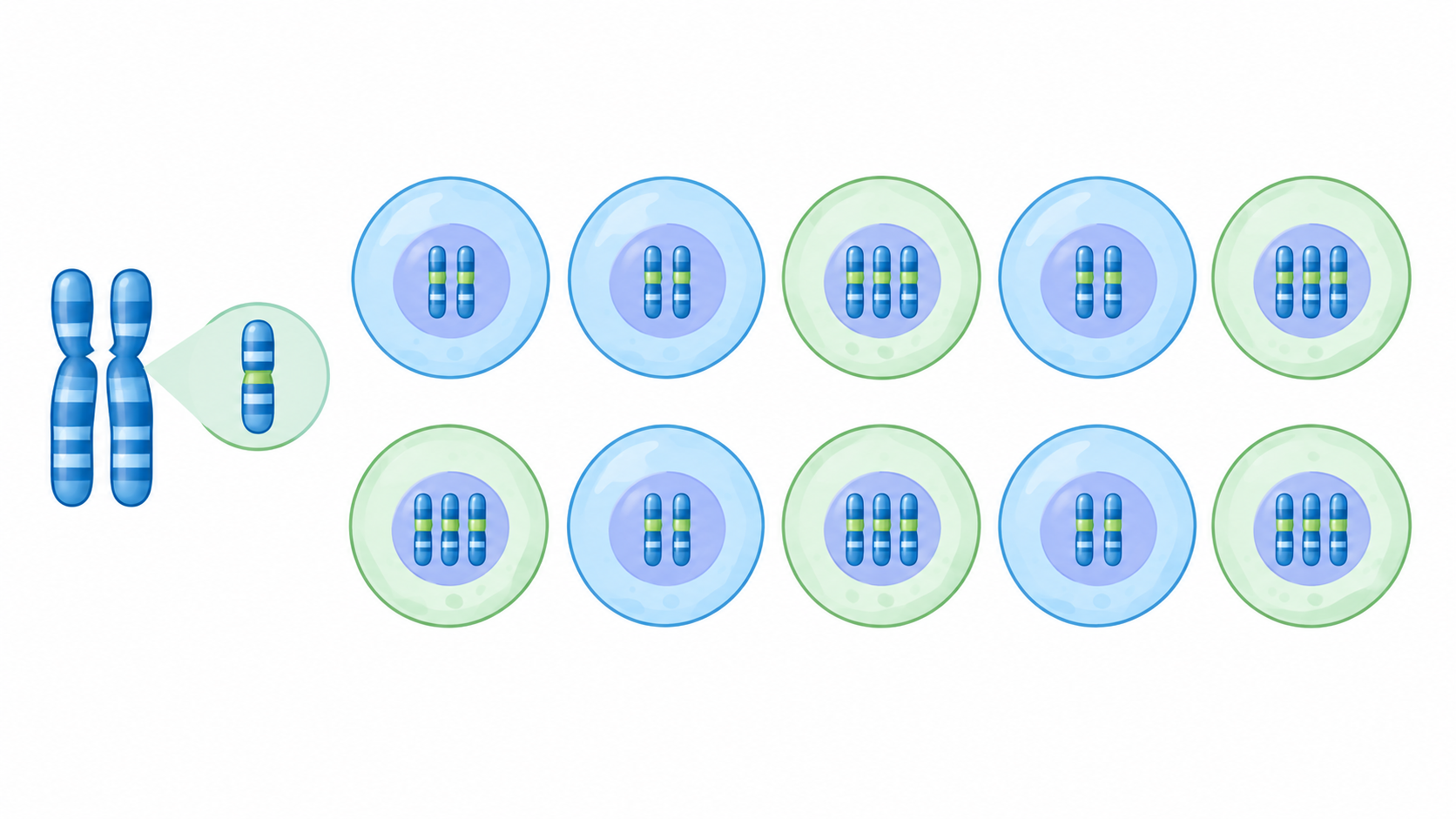
Quick answer: Mosaic Down syndrome means that a person has a mixture of cells: some with the usual two copies of chromosome 21 and some with an extra copy. Its effects vary, and the diagnosis alone cannot predict an individual's abilities, development, or health.
How Does Mosaic Down Syndrome Develop?
Mosaic Down syndrome usually develops because of a chromosome separation error during cell division early in embryonic development. As cells continue dividing, some descendants may have the typical chromosome count while others have an extra chromosome 21.
The result is a mixture of cell populations. The percentage of cells with an extra chromosome can differ between individuals and may also differ between tissues in the same person.
Mosaic Down syndrome generally occurs as a random event during early development. It is not usually inherited. A healthcare professional or genetic counselor can discuss the circumstances of an individual diagnosis and whether any family-specific assessment is appropriate.
For a general explanation of mosaicism, see MedlinePlus: Mosaicism .
Mosaic Down Syndrome Symptoms and Possible Signs
The signs and characteristics of mosaic Down syndrome vary widely. Some people have features commonly associated with Down syndrome, while others may have fewer recognizable features. A person's development and health cannot be reliably predicted from appearance or from a reported percentage of mosaic cells alone.
Possible features and areas of support may include:
- Developmental differences: Some children may reach developmental milestones, such as sitting, walking, or speaking, later than expected.
- Learning and communication: Learning profiles and communication needs vary. Some people benefit from additional educational or communication support.
- Muscle tone: Lower muscle tone, also called hypotonia, may occur.
- Physical characteristics: Some people may have physical features associated with Down syndrome, but these features are not present in every person.
- Health conditions: Some individuals may have conditions that are more common in Down syndrome, such as congenital heart defects, hearing or vision difficulties, thyroid problems, or sleep apnea.
These are possibilities, not a checklist for diagnosing someone. Many of these characteristics can occur for reasons unrelated to Down syndrome, and only appropriate clinical assessment and genetic testing can establish the diagnosis.
The National Institute of Child Health and Human Development describes the range of physical and developmental features associated with Down syndrome.
Does Mosaic Down Syndrome Always Cause Milder Effects?
No. It is not accurate to assume that mosaic Down syndrome is always mild or that every person with mosaicism will have fewer support needs than someone with another type of Down syndrome.
The effects may depend on several factors, including which cells and tissues contain the extra chromosome, the distribution of those cells, and the individual's particular health and developmental profile. A chromosome test performed on one tissue, such as blood, may not represent every tissue in the body.
For this reason, a reported percentage of mosaic cells should not be used on its own to forecast a person's intelligence, communication skills, independence, medical needs, or future development.
The National Cancer Institute's definition of mosaic Down syndrome also notes that the condition can vary depending on how many cells have the extra chromosome.
Mosaic Down Syndrome vs. Down Syndrome
Mosaic Down syndrome is one of the chromosome patterns that can cause Down syndrome. The comparison below describes the genetic distinction; it does not rank people by ability or predict an individual's outcome.
| Feature | Mosaic Down syndrome | Trisomy 21 (non-mosaic) |
|---|---|---|
| Chromosome pattern | A mixture of cells, some with two copies of chromosome 21 and some with three. | An extra chromosome 21 is present in nearly all cells. |
| Cell populations | Two or more chromosome patterns are present. | The typical pattern is three copies of chromosome 21 in each cell. |
| Features and support needs | Can vary considerably from person to person. | Also vary considerably from person to person. |
| Diagnosis | Requires chromosome analysis that identifies mosaicism. | Chromosome analysis identifies the extra chromosome 21 in the cells tested. |
Down syndrome can also result from a chromosome translocation, in which extra chromosome 21 material is attached to another chromosome. These chromosome patterns are distinguished through genetic testing.
Learn more from the CDC's Down syndrome overview .
How Is Mosaic Down Syndrome Diagnosed?
Mosaic Down syndrome is diagnosed through chromosome testing. A healthcare professional may recommend testing when prenatal screening, physical findings, developmental concerns, or other clinical information indicate that chromosome analysis may be useful.
Chromosome analysis
A karyotype examines chromosomes in a sample of cells and can identify an extra chromosome 21 as well as mosaic patterns in the cells tested. The type of sample and the number of cells examined can affect whether mosaicism is detected.
Prenatal screening and diagnostic testing
During pregnancy, screening tests estimate the chance that a fetus has Down syndrome. Screening is not the same as a diagnostic test. Diagnostic testing examines genetic material from a sample and can help establish whether a chromosome condition is present.
A clinician or genetic counselor can explain the purpose, limitations, and possible risks of available tests, and help interpret results in the context of the pregnancy.
For more information, read MedlinePlus: Down Syndrome Tests .
Can mosaicism be missed?
Mosaicism may not be detected in every sample because different tissues can contain different proportions of cell populations. If the clinical picture and initial test results do not align, a healthcare professional may consider whether further evaluation is appropriate. Testing decisions should be individualized.
Health Considerations and Ongoing Care
Mosaic Down syndrome does not have one treatment that changes the chromosome pattern. Care focuses on the person's health, development, strengths, and individual support needs.
Depending on the person's circumstances, healthcare professionals may recommend routine care and assessments related to:
- Heart health and congenital heart conditions
- Hearing and vision
- Thyroid function
- Sleep and possible sleep apnea
- Growth, feeding, and development
- Speech, physical, or occupational therapy when helpful
- Educational, communication, and social support
Not everyone will need every assessment or service. A care plan should be guided by the person's age, medical history, symptoms, and recommendations from their healthcare team.
The CDC explains that people with Down syndrome may have different health needs and that appropriate support and care are important.
Is Mosaic Down Syndrome Inherited?
Mosaic Down syndrome usually results from a random event during early fetal development rather than being passed down from a parent. However, the genetics of Down syndrome can vary by chromosome pattern, and family-specific questions are best discussed with a genetic counselor or qualified healthcare professional.
If you are planning a pregnancy and have questions about recurrence risk or genetic testing, seek individualized counseling rather than relying on general estimates.
Mosaic Down Syndrome and Celebrities: What Is Known?
Online searches sometimes ask about celebrities with mosaic Down syndrome. However, a person's appearance, behavior, or public discussion of disability is not evidence of a chromosome diagnosis.
Unless a person has publicly disclosed a diagnosis through a reliable source, it is inappropriate to speculate about their genetic or medical status. This article therefore does not list public figures as having mosaic Down syndrome based on rumors or unverified claims.
For reliable information, focus on medical and genetics sources that explain the condition rather than unsubstantiated celebrity lists.
Living With Mosaic Down Syndrome
Each person with mosaic Down syndrome has an individual life, personality, set of strengths, and support needs. A diagnosis does not define the whole person or determine what they can achieve.
Families and caregivers may find it helpful to work with healthcare professionals, educators, therapists, and support organizations. As with any child, support should be adapted to the person's needs and preferences, with opportunities for communication, learning, relationships, participation, and growing independence.
If you or someone in your family has recently received a diagnosis, a genetic counselor or clinician familiar with Down syndrome can help explain the test results and discuss appropriate next steps.
Frequently Asked Questions About Mosaic Down Syndrome
What is mosaic Down syndrome in simple terms?
Mosaic Down syndrome is a genetic condition in which some cells have an extra copy of chromosome 21 and other cells have the usual two copies. This mixture of cells is called mosaicism.
What are the symptoms of mosaic Down syndrome?
Features vary. Some people may have developmental differences, lower muscle tone, physical characteristics associated with Down syndrome, or certain health conditions. Others may have different combinations of features. Symptoms alone cannot confirm the diagnosis.
Is mosaic Down syndrome always milder?
No. Some people may have fewer recognizable features, but the condition does not always have milder effects. The distribution of cells and a person's individual health and development are important, and a mosaic percentage cannot reliably predict an individual's abilities or support needs.
How is mosaic Down syndrome confirmed?
It is confirmed through chromosome testing, such as a karyotype, that identifies different cell populations. A clinician can explain which test is appropriate and how to interpret the result.
Can mosaic Down syndrome be detected before birth?
Prenatal screening can estimate the chance of Down syndrome, while diagnostic tests can examine fetal genetic material. Whether mosaicism is identified depends in part on the cells or sample examined. A prenatal specialist or genetic counselor can explain the available options and their limitations.
Is mosaic Down syndrome inherited?
It usually arises as a random event during early development and is not inherited. Questions about a particular family's circumstances should be discussed with a genetic counselor.
Can someone with mosaic Down syndrome live a full life?
People with Down syndrome have individual lives, relationships, interests, and goals. Health and support needs vary, and appropriate medical care, education, and individualized support can help people participate in their communities and pursue their goals.
Can you tell if someone has mosaic Down syndrome by looking at them?
No. Appearance cannot establish a chromosome diagnosis. Mosaic Down syndrome requires appropriate genetic testing and clinical interpretation.
Conclusion
Mosaic Down syndrome is a form of Down syndrome in which some cells have an extra chromosome 21 and others do not. Its features and effects can differ substantially between individuals, and neither appearance nor a single mosaic percentage can predict a person's future development or health.
Genetic testing can help establish the diagnosis, while individualized healthcare, developmental support, and respectful inclusion can help address a person's needs throughout life. For personal medical or family-planning questions, speak with a qualified healthcare professional or genetic counselor.
Related Reading
- Moringa Powder: Benefits, Nutrition, Uses & Safety
- Explore Nutrition Guides
- Healthy Lifestyle Articles
Editor's note: Confirm that each internal URL is published on your website before using it. Replace or remove any link that does not lead to a relevant live page.
Medical Disclaimer
This article is for general educational purposes only and is not a substitute for professional medical advice, diagnosis, or treatment. It should not be used to diagnose mosaic Down syndrome or make individual medical decisions. Consult a qualified healthcare professional or genetic counselor for advice about a specific person or pregnancy.