Quick Answer: Tesofensine is an investigational weight-loss compound that suppresses appetite and increases energy expenditure by blocking the reuptake of dopamine, norepinephrine, and serotonin. Despite how it's often marketed, it is not a peptide, it's a small-molecule drug. In clinical trials it produced significantly more weight loss than currently approved obesity medications, but it is not FDA-approved, and its use comes with cardiovascular side effects that require medical monitoring.
What Is Tesofensine?
Tesofensine was originally developed to treat neurodegenerative conditions like Parkinson's and Alzheimer's disease. During early trials, researchers noticed an unexpected effect: participants were losing significant amounts of weight. That discovery redirected years of research toward tesofensine's potential as an anti-obesity treatment.
Tesofensine works as a triple monoamine reuptake inhibitor, meaning it blocks the reabsorption of three key neurotransmitters: dopamine, norepinephrine, and serotonin. These chemicals play a central role in regulating appetite, reward, mood, and energy expenditure. By keeping more of them active in the brain, tesofensine produces strong appetite suppression along with a measurable increase in metabolic rate.
Chemically, tesofensine belongs to the phenyltropane family of compounds, taken orally as a tablet. One notable pharmacological feature is its unusually long half-life, roughly 9 days (220 hours), with an active metabolite that persists even longer, around 16 days. This long duration is part of why dosing is typically once daily, and why side effects, if they occur, can take time to fully resolve after a dose change.
Is Tesofensine a Peptide?
No. This is one of the most common misconceptions surrounding tesofensine, and it's worth clearing up directly: tesofensine is not a peptide. Peptides are short chains of amino acids. Tesofensine is a small-molecule pharmaceutical compound, chemically unrelated to peptide-based drugs like semaglutide or tirzepatide.
The confusion largely comes from where tesofensine is sold. It's frequently distributed by the same research-chemical and compounding vendors that carry actual peptides, which has caused the "peptide" label to stick in casual usage and in search behavior, even though it isn't chemically accurate.
How Tesofensine Works
Tesofensine's dual mechanism is what sets it apart from most weight-loss drugs on the market. Rather than targeting a single pathway, it acts on three:
Tesofensine Benefits: What Clinical Trials Show
The most cited tesofensine research is a 24-week, randomized, double-blind, placebo-controlled Phase 2 trial published in The Lancet, involving 203 obese participants. All groups followed a modest calorie-restricted diet, and researchers compared placebo against three tesofensine doses: 0.25 mg, 0.5 mg, and 1.0 mg daily. Our free Wellness Toolkit can help you track your own weight trends if you're following any structured weight-management plan.
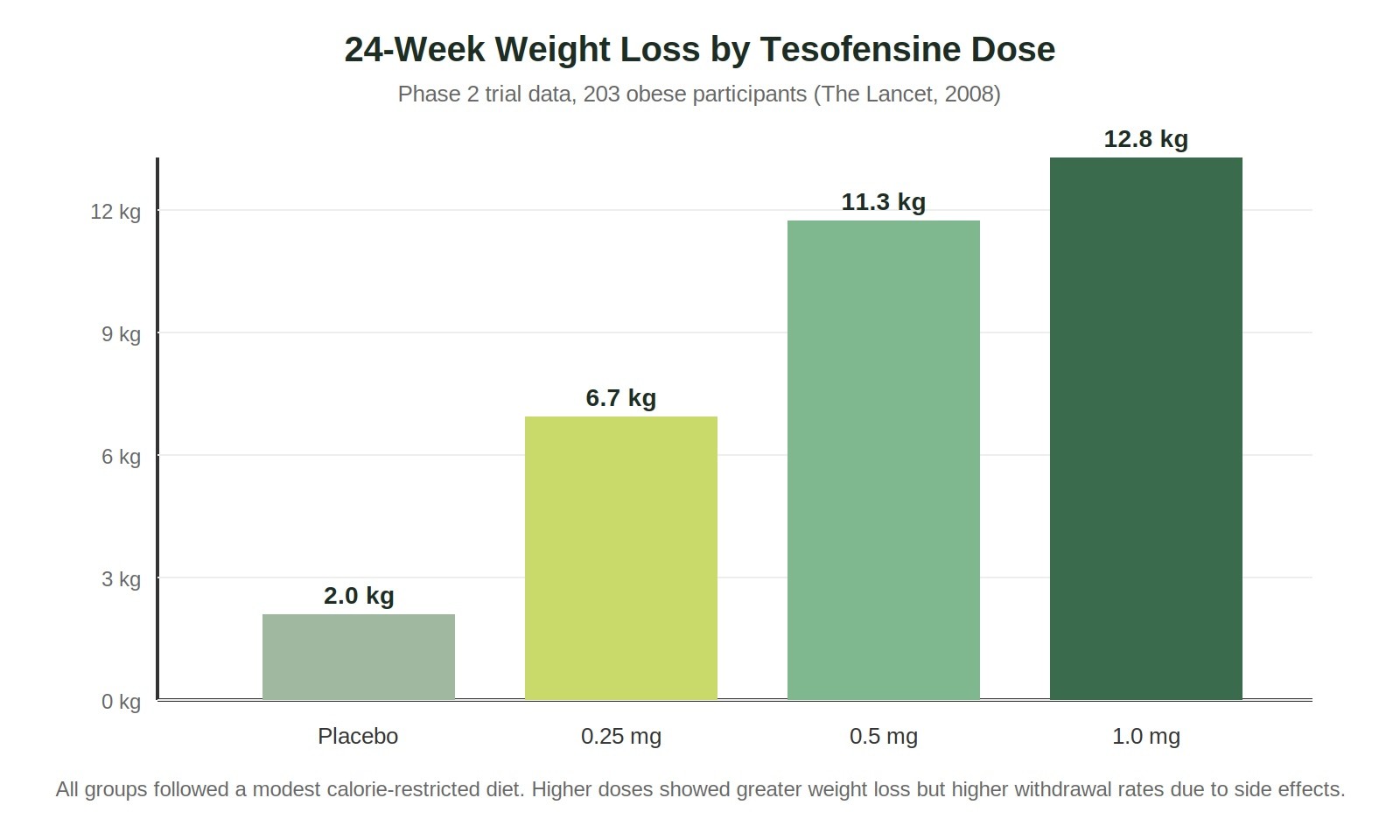
At the 0.5 mg dose, considered the most clinically relevant based on its balance of efficacy and tolerability, participants lost roughly double the weight typically achieved with approved obesity medications at the time of the study. Weight loss was dose-dependent: higher doses produced greater results, but also came with a higher rate of side effects and trial withdrawals.
Tesofensine Side Effects
Tesofensine's side-effect profile is closely tied to the same neurotransmitter activity that makes it effective. The most commonly reported effects across clinical trials include:
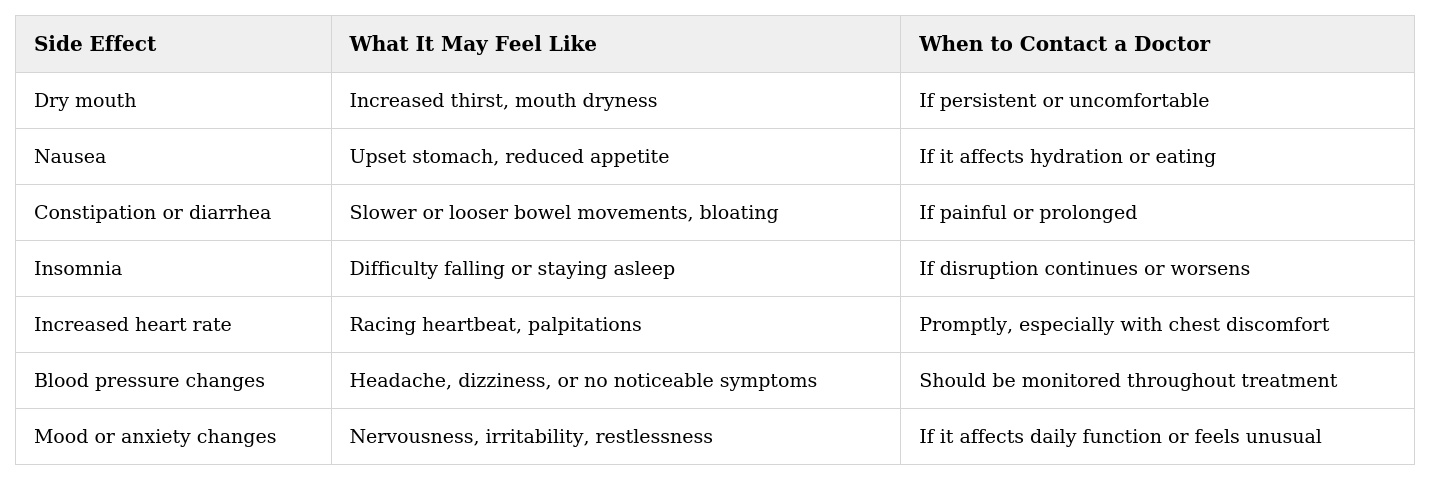
The more clinically significant concern is cardiovascular: tesofensine has consistently been shown to raise heart rate (by up to 8 beats per minute at therapeutic doses) and, at higher doses, blood pressure as well. This cardiovascular signal is the primary reason tesofensine hasn't progressed toward FDA approval in the United States. In one Phase 2 trial, the overall withdrawal rate due to adverse events was 13% in the tesofensine group, compared to 6% on placebo.
Combining tesofensine with SSRIs, SNRIs, or MAOIs is specifically discouraged due to the risk of serotonin syndrome, a potentially serious condition caused by excess serotonin activity.
Tesofensine Dosage: What Was Studied in Trials
It's important to be direct here: the following reflects what was tested in published clinical research, not a dosing recommendation. Tesofensine is not approved for use, and any decision about dosing should only be made under the supervision of a licensed physician who can monitor cardiovascular effects throughout treatment.
With that context, the Phase 2 trial tested three daily doses: 0.25 mg, 0.5 mg, and 1.0 mg. The 0.5 mg dose showed the best balance between weight-loss efficacy and tolerability, with fewer participants withdrawing compared to the 1.0 mg group. A separate combination product, Tesomet, pairs tesofensine with the beta-blocker metoprolol specifically to counteract the heart-rate increase, and has received regulatory approval in Mexico, though not in the United States.
Stopping Tesofensine: What to Expect
"Tesofensine withdrawal" gets searched two different ways, and it's worth addressing both. First, in the clinical trial sense: roughly 13% of participants in trials discontinued tesofensine due to side effects, more than double the placebo rate, which reflects how the drug's stimulant-like effects on dopamine and norepinephrine aren't well tolerated by everyone.
Second, in the sense of what happens after stopping: because tesofensine affects dopamine, serotonin, and norepinephrine activity, discontinuation can involve a return of appetite and, in some cases, temporary mood changes as neurotransmitter activity readjusts. This is a reason cited by proponents of gradual tapering under medical supervision, rather than abrupt discontinuation, though robust long-term discontinuation data is limited.
Is Tesofensine FDA-Approved?
No. As of 2026, tesofensine has no active FDA approval pathway and is not available by prescription in the United States. Any use in the US occurs off-label, typically sourced through compounding pharmacies, telehealth weight-loss clinics, or research-chemical vendors, none of which carry the same manufacturing oversight, quality assurance, or pharmacovigilance as an FDA-approved drug. The cardiovascular safety signal identified in Phase 2 trials remains the central obstacle to broader approval.
Tesofensine vs. GLP-1 Medications
Since GLP-1 drugs like semaglutide and tirzepatide currently dominate the weight-loss conversation, it's worth seeing how tesofensine's profile compares on paper. The two work through entirely different biological pathways.
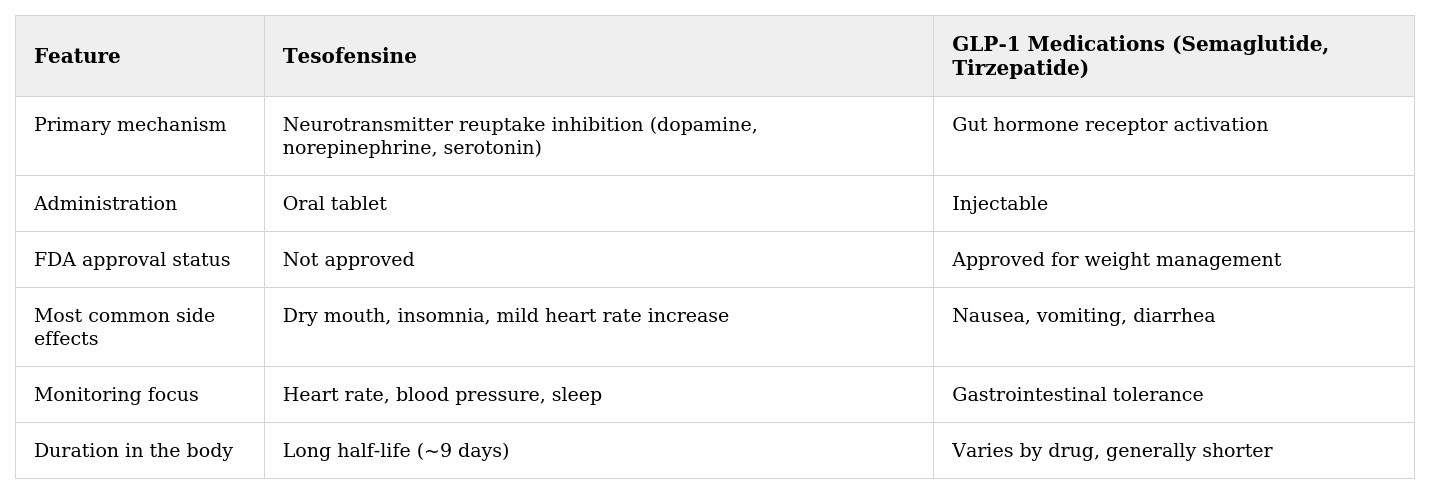
Neither option is inherently "better." The right choice, if either is appropriate at all, depends on individual medical history, tolerance, and a physician's evaluation.
Beyond Weight Loss: Other Research Directions
Because tesofensine affects dopamine and serotonin activity broadly, researchers have explored a few directions beyond obesity, though none of these represent approved or established uses. Early and largely preliminary research has looked at potential effects on mood, binge eating behavior, and cognitive function, and animal studies have examined its impact on neurotransmitter pathways relevant to ADHD. This research is exploratory. It should not be read as evidence that tesofensine is an effective or appropriate treatment for depression, ADHD, or eating disorders, and none of these are approved indications anywhere in the world.
Who Should Avoid Tesofensine
Based on the safety signals identified in clinical research, people with the following should have a thorough medical evaluation, and in many cases avoid tesofensine altogether, before considering it:
Frequently Asked Questions
Is tesofensine a peptide?
No. Tesofensine is a small-molecule triple monoamine reuptake inhibitor, not a peptide. It's commonly sold alongside peptides and marketed using that label, but it's chemically distinct.
What is tesofensine used for?
Tesofensine was originally studied for Parkinson's and Alzheimer's disease. It's now primarily researched and used off-label for weight management, based on its appetite-suppressing and metabolism-boosting effects observed in clinical trials.
What are the main tesofensine side effects?
The most commonly reported side effects are dry mouth, nausea, constipation, insomnia, and headache. The more clinically significant effects are increased heart rate and, at higher doses, elevated blood pressure.
Is tesofensine FDA-approved?
No. Tesofensine is not FDA-approved for any indication as of 2026. Its cardiovascular side-effect profile has been the main obstacle to approval in the United States.
What tesofensine dosage was used in clinical trials?
Published trials tested 0.25 mg, 0.5 mg, and 1.0 mg daily doses. This reflects published research only, not a dosing recommendation, and any use should be supervised by a physician.
Does tesofensine cause withdrawal symptoms?
Discontinuing tesofensine can involve a return of appetite and, in some cases, temporary mood changes as dopamine, serotonin, and norepinephrine activity readjust. Long-term discontinuation data remains limited.
How fast does tesofensine work?
Appetite-suppressing effects have been reported within the first 14 days of treatment in clinical trials, along with measurable increases in resting energy expenditure over that same period. Meaningful weight loss builds progressively over the full trial period, typically 24 weeks or longer.
Is tesofensine a fat burner?
It functions differently from typical over-the-counter fat burners. Rather than relying on stimulant thermogenesis alone, tesofensine primarily works by suppressing appetite through neurotransmitter reuptake inhibition, with a secondary, modest boost to energy expenditure and fat oxidation.
Does tesofensine cause hair loss?
Hair loss does not appear among the side effects reported in published tesofensine clinical trials. It's a common autocomplete search, but there's no clinical evidence connecting the two at this time. Any new or unexplained hair loss while taking any medication should be discussed with a physician.
Can tesofensine treat depression or ADHD?
These are not approved uses. Some early and preliminary research has explored tesofensine's broader effects on mood and neurotransmitter pathways relevant to conditions like ADHD, but this research is exploratory and shouldn't be interpreted as evidence of effectiveness for these conditions.
This article is for general educational purposes and isn't a substitute for professional medical advice. Tesofensine is not FDA-approved. Anyone considering its use should consult a licensed physician who can evaluate cardiovascular risk and provide ongoing monitoring.
Sources: The Lancet via PubMed: Effect of Tesofensine on Bodyweight Loss, Body Composition, and Quality of Life in Obese Patients · ScienceDirect: Tesofensine Overview · ClinicalTrials.gov: Tesofensine/Metoprolol Study · Wikipedia: Tesofensine