Ashwagandha gummies are chewable supplements made with ashwagandha, a plant traditionally used in Ayurvedic medicine. They are commonly marketed for stress management, relaxation, and sleep. Some products also contain vitamins, sweeteners, or other ingredients.
But do ashwagandha gummies work, what does research actually show, and how can you assess their safety? This guide explains their common uses, the limits of current evidence, label considerations, and precautions to know before taking them.

In This Article
- What Are Ashwagandha Gummies?
- What Are Ashwagandha Gummies For?
- Potential Benefits and Research
- Do Ashwagandha Gummies Work?
- How Many Ashwagandha Gummies Should You Take?
- Ingredients and Supplement Labels
- Goli Ashwagandha Gummies
- Side Effects and Safety
- How to Evaluate a Product
- Frequently Asked Questions
What Are Ashwagandha Gummies?
Ashwagandha gummies are dietary supplements that contain Withania somnifera, a plant also known as ashwagandha or winter cherry. The plant has a long history of use in traditional Ayurvedic and Unani medicine.
Supplements may contain ashwagandha root powder, root extract, or preparations made from the root and leaves. These forms are not automatically equivalent: plant parts, extraction methods, and concentrations can differ between products.
Gummies offer a chewable alternative to capsules, powders, and liquids. Depending on the brand, they may contain added sugar, sugar substitutes, flavorings, or additional nutrients.
The National Center for Complementary and Integrative Health (NCCIH) explains that ashwagandha supplements are promoted for several purposes, including stress and sleep, but studies have used a variety of preparations. Read the NCCIH ashwagandha overview .
What Are Ashwagandha Gummies For?
Ashwagandha gummies are often marketed for stress, relaxation, and sleep. These are common supplement claims, but marketing language should not be confused with proof that a particular gummy product produces a specific result.
Common reasons people may consider ashwagandha supplements include:
- Stress: Some research has examined whether particular ashwagandha extracts may affect perceived stress.
- Sleep: Small studies have investigated possible effects on sleep quality and insomnia.
- Relaxation: Products may be promoted for relaxation, although the evidence and formulation matter.
- General wellness: Some supplements are marketed broadly for well-being, but that does not establish that they prevent disease or improve health in every user.
These potential uses should be understood in the context of the available research and the safety precautions discussed below.
Ashwagandha Gummies Benefits: What Does Research Say?
Research has investigated certain ashwagandha preparations for stress and sleep. However, many studies have been relatively small, have lasted only a short time, and have used different extracts and doses. Findings about one extract cannot automatically be applied to every gummy on the market.
1. Stress
Some clinical studies suggest that certain ashwagandha extracts may help reduce perceived stress. The NIH Office of Dietary Supplements (ODS) describes studies in which participants taking ashwagandha reported lower stress levels, but additional research is needed to confirm the findings and clarify which preparations may be useful.
2. Sleep
A small number of studies suggest that some ashwagandha extracts may improve aspects of sleep, including sleep quality or the time it takes to fall asleep. The reported effects have generally been modest, and the evidence does not establish that every ashwagandha gummy improves sleep.
3. Anxiety
Ashwagandha is also promoted for anxiety. However, the evidence is less clear than some product advertisements may suggest. It should not be considered a replacement for professional assessment or evidence-based care for an anxiety disorder.
4. Other Health Claims
Ashwagandha is marketed for a range of additional outcomes, but there is not enough reliable evidence to determine whether it is helpful for many of these uses. Claims involving disease treatment, prevention, or guaranteed results should be treated cautiously.
The NIH summarizes the current evidence and its limitations here: Ashwagandha: Is it helpful for stress, anxiety, or sleep? .
Do Ashwagandha Gummies Work?
The most accurate answer is that some ashwagandha preparations have shown potential in studies of stress and sleep, but evidence is limited and results cannot be assumed to apply to all gummies.
Whether a particular product resembles the preparations used in research depends on several factors:
- The plant part used, such as root or root and leaf.
- Whether the product contains whole-plant powder or an extract.
- The amount of ashwagandha per serving.
- The extract's composition and standardization, if applicable.
- Other active ingredients in the formula.
- The duration of use and the outcomes being considered.
A gummy's format alone does not demonstrate effectiveness. Look for transparent ingredient information, and be cautious about claims promising immediate, dramatic, or guaranteed results.
The NIH ODS notes that different preparations and doses make it difficult to draw firm conclusions about specific products. Review the NIH health professional fact sheet .
How Many Ashwagandha Gummies Should You Take a Day?
There is no single daily gummy count that applies to every ashwagandha supplement. Products differ in serving size, concentration, extract type, and additional ingredients.
Follow the directions on the specific product label, and do not take more than the stated serving. Do not use the dosage from another brand as a substitute: two gummies from different products may contain different amounts and forms of ashwagandha.
Before Taking a Serving
- Check how many gummies make up one serving.
- Read the amount of ashwagandha listed per serving.
- Check whether the label describes root powder or an extract.
- Review any other active ingredients and warnings.
- Ask a healthcare professional if you take medicines or have a medical condition.
Studies of ashwagandha have used varied preparations and doses. Those research doses should not be converted into a gummy recommendation without knowing whether the product is comparable.
If you are unsure how to interpret the label, ask a pharmacist or another qualified healthcare professional before using the supplement.
Ashwagandha Gummies Ingredients: What to Check
Not all ashwagandha gummies have the same formula. Reading the ingredient list and supplement facts panel can help you understand what a product contains.
Ashwagandha Amount and Form
Check whether the label lists ashwagandha root powder, root extract, or a combination of plant parts. If it identifies an extract, look for information about the extract and any stated standardization. A larger milligram number does not necessarily mean that two different formulations are equivalent.
Added Sweeteners
Gummies may contain sugar, glucose syrup, sugar alcohols, or non-sugar sweeteners. Review the nutrition information if you monitor your sugar intake or prefer to avoid particular sweeteners.
Additional Ingredients
Some formulas include vitamins, minerals, or other botanicals. Consider each ingredient separately, particularly if you already take supplements or medicines.
Directions and Warnings
Read the serving instructions, storage guidance, age restrictions, and safety warnings. Do not assume that a product is appropriate for you simply because it is sold without a prescription.
Goli Ashwagandha Gummies
Goli is a brand name people may encounter when searching for ashwagandha gummies. Product names, ingredients, serving sizes, and formulas can change, so check the current packaging and official product information rather than relying on an older description or a review of a different formula.
When evaluating Goli ashwagandha gummies—or any other branded product—check the amount and form of ashwagandha per serving, the full ingredient list, directions, and warnings. A brand name or a “zero sugar” description does not by itself establish effectiveness or suitability for an individual.
Do not assume that evidence from a clinical study of a specific ashwagandha extract proves that a branded gummy has the same effects. The preparation and amount need to be considered.
Ashwagandha Gummies Side Effects and Safety
Ashwagandha may be tolerated by some adults over short periods, but it is not risk-free. The NCCIH states that short-term use of up to about three months may be safe for some people, while long-term safety has not been established.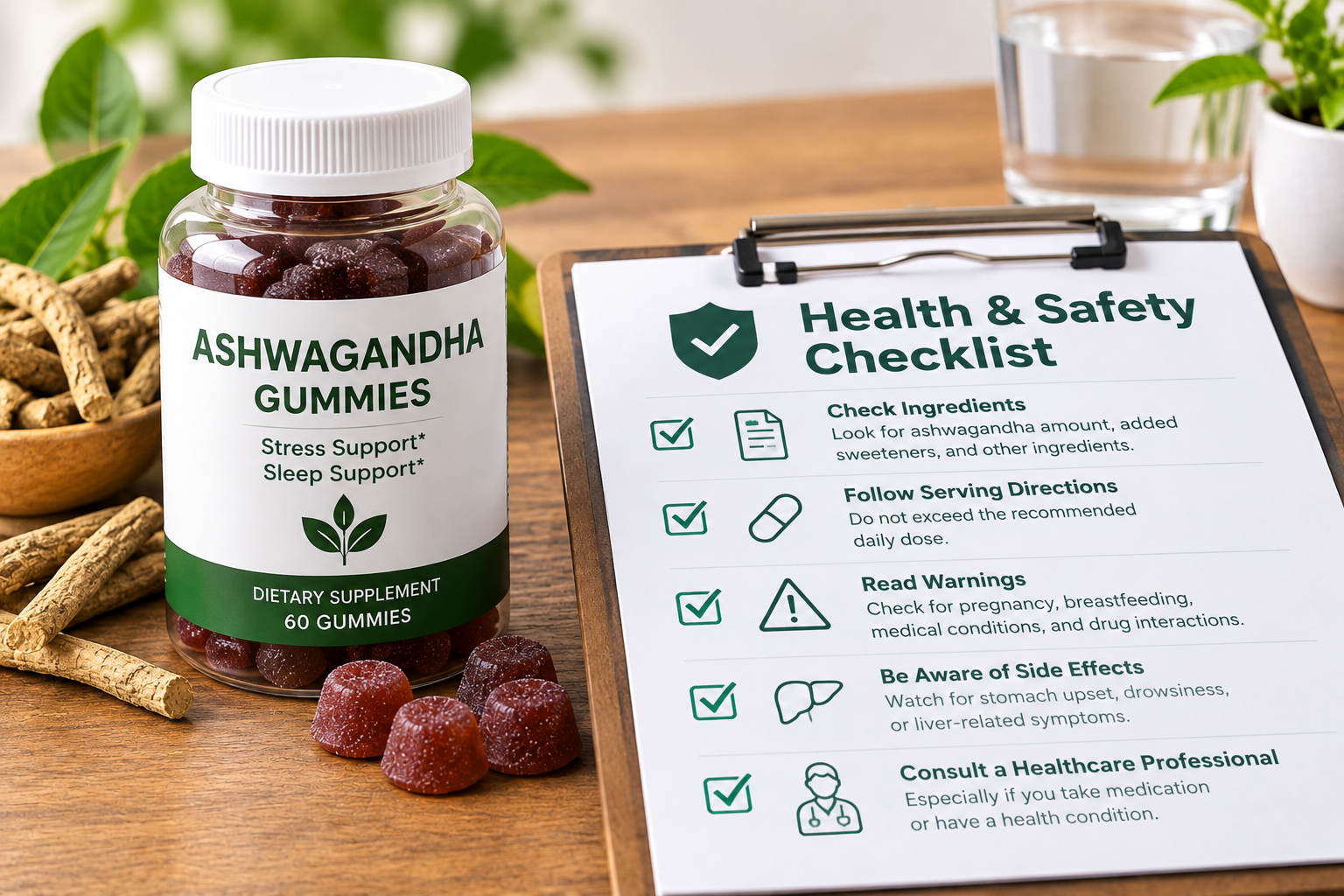
Possible Side Effects
Reported side effects can include:
- Upset stomach
- Loose stools or diarrhea
- Nausea or vomiting
- Drowsiness
Liver Concerns
Although uncommon, cases of liver injury have been associated with ashwagandha supplements. Stop taking the supplement and seek medical advice if you develop concerning symptoms such as yellowing of the skin or eyes, dark urine, unusual itching, or persistent abdominal discomfort.
Pregnancy and Breastfeeding
Ashwagandha should be avoided during pregnancy and should not be used while breastfeeding, according to NCCIH guidance.
Thyroid and Autoimmune Conditions
Ashwagandha may affect thyroid function and is not recommended for people with thyroid or autoimmune disorders unless a healthcare professional specifically advises otherwise.
Medication Interactions
Ashwagandha may interact with certain medicines, including medications for diabetes and high blood pressure, sedatives, anticonvulsants, immunosuppressants, and thyroid hormone medications. Consult a healthcare professional before use if you take medication.
Surgery and Other Precautions
NCCIH advises against using ashwagandha for people who are about to have surgery. It may also be unsuitable for people with hormone-sensitive prostate cancer because it may affect testosterone levels.
Safety guidance: NCCIH: Ashwagandha—Usefulness and Safety .
How to Evaluate Ashwagandha Gummies
If you are comparing products, use the following checklist to review their information:
- Clear labeling: Look for the amount and form of ashwagandha per serving.
- Full ingredient list: Review sweeteners, flavorings, and additional active ingredients.
- Serving directions: Follow the stated serving and avoid exceeding it.
- Warnings: Read precautions and consider whether they apply to your circumstances.
- Realistic claims: Be cautious of promises to cure anxiety, eliminate stress, or guarantee better sleep.
- Professional guidance: Ask a qualified healthcare professional if you have medical conditions, take medicines, or are uncertain about use.
In the United States, dietary supplements are not approved by the FDA for safety and effectiveness before marketing in the same way as medicines. This makes careful label review and appropriate professional advice especially important.
Frequently Asked Questions About Ashwagandha Gummies
What do ashwagandha gummies do?
They provide ashwagandha in a chewable supplement form. Products are commonly marketed for stress and sleep, but evidence varies by preparation, and not all gummies have been clinically studied.
Do ashwagandha gummies work?
Some ashwagandha preparations have shown potential in studies of stress and sleep. However, evidence is limited, and results from one extract cannot automatically be applied to every gummy.
What are ashwagandha gummies for?
They are commonly promoted for stress management, relaxation, and sleep. These are marketed uses, not a guarantee that a particular product will provide those effects.
How many ashwagandha gummies should I take a day?
Follow the serving directions on the specific product label. Gummies differ in strength and formulation, so there is no universal number that applies to every brand.
Can I take ashwagandha gummies every day?
Daily use should be considered in light of the product label, your health, and possible medication interactions. Long-term safety has not been established. Ask a healthcare professional before using them regularly, particularly if you take medicines or have a medical condition.
Are ashwagandha gummies safe during pregnancy?
No. NCCIH advises avoiding ashwagandha during pregnancy and not using it while breastfeeding.
Can ashwagandha gummies interact with medication?
Yes. Ashwagandha may interact with several types of medication, including thyroid medicines, sedatives, immunosuppressants, and some medicines for diabetes and high blood pressure. Consult a healthcare professional before use.
Are Goli ashwagandha gummies the same as other brands?
Not necessarily. Brands can differ in their ingredients, serving sizes, and formulations. Check the current product label and do not assume that studies of another preparation establish the effects of a specific branded gummy.
The Bottom Line
Ashwagandha gummies are a convenient chewable form of an herbal supplement often marketed for stress and sleep. Some studies of particular ashwagandha preparations suggest potential benefits, but the evidence is limited and does not establish that every gummy product will produce the same results.
Check the formulation, serving directions, ingredients, and warnings carefully. Ashwagandha can cause side effects, may interact with medicines, and is not suitable for everyone. Speak with a qualified healthcare professional before using it if you are pregnant, breastfeeding, take medication, or have a relevant health condition.
References
- National Center for Complementary and Integrative Health: Ashwagandha—Usefulness and Safety
- NIH Office of Dietary Supplements: Ashwagandha—Consumer Fact Sheet
- NIH Office of Dietary Supplements: Ashwagandha—Health Professional Fact Sheet
Health disclaimer: This article is for informational purposes only and is not a substitute for professional medical advice, diagnosis, or treatment. Consult a qualified healthcare professional before starting a dietary supplement, particularly if you take medication, have a medical condition, are pregnant, or are breastfeeding.